The CFO Bridge: Translating Features into P&L Impact
Financial Value Engineering
STRATEGIC CONTEXT: The CFO is the ultimate decision-maker in B2B SaaS. This model translates operational soft skills (like learning) into hard currency (P&L impact). I build these 'Value Engineering' frameworks for every product I manage to ensure our pricing is defensible and the cost of inaction is quantified.
$7.3M
Projected Annual Impact (Enterprise Customer)Achieved through efficiency gains, risk avoidance, and reduced waste.
The Objective: Arm internal champions with a defensible CFO-ready business case.
Marketing often fails to speak Finance. This model was built to survive scrutiny from the CFO's office, using their own conservative assumptions to prove value. I developed this narrative to translate "operational capability" into hard currency. It quantifies the hidden costs of inconsistency—rework, waste, and risk—to demonstrate a clear path to P&L impact.
Marketing often fails to speak Finance. This model was built to survive scrutiny from the CFO's office, using their own conservative assumptions to prove value. I developed this narrative to translate "operational capability" into hard currency. It quantifies the hidden costs of inconsistency—rework, waste, and risk—to demonstrate a clear path to P&L impact.
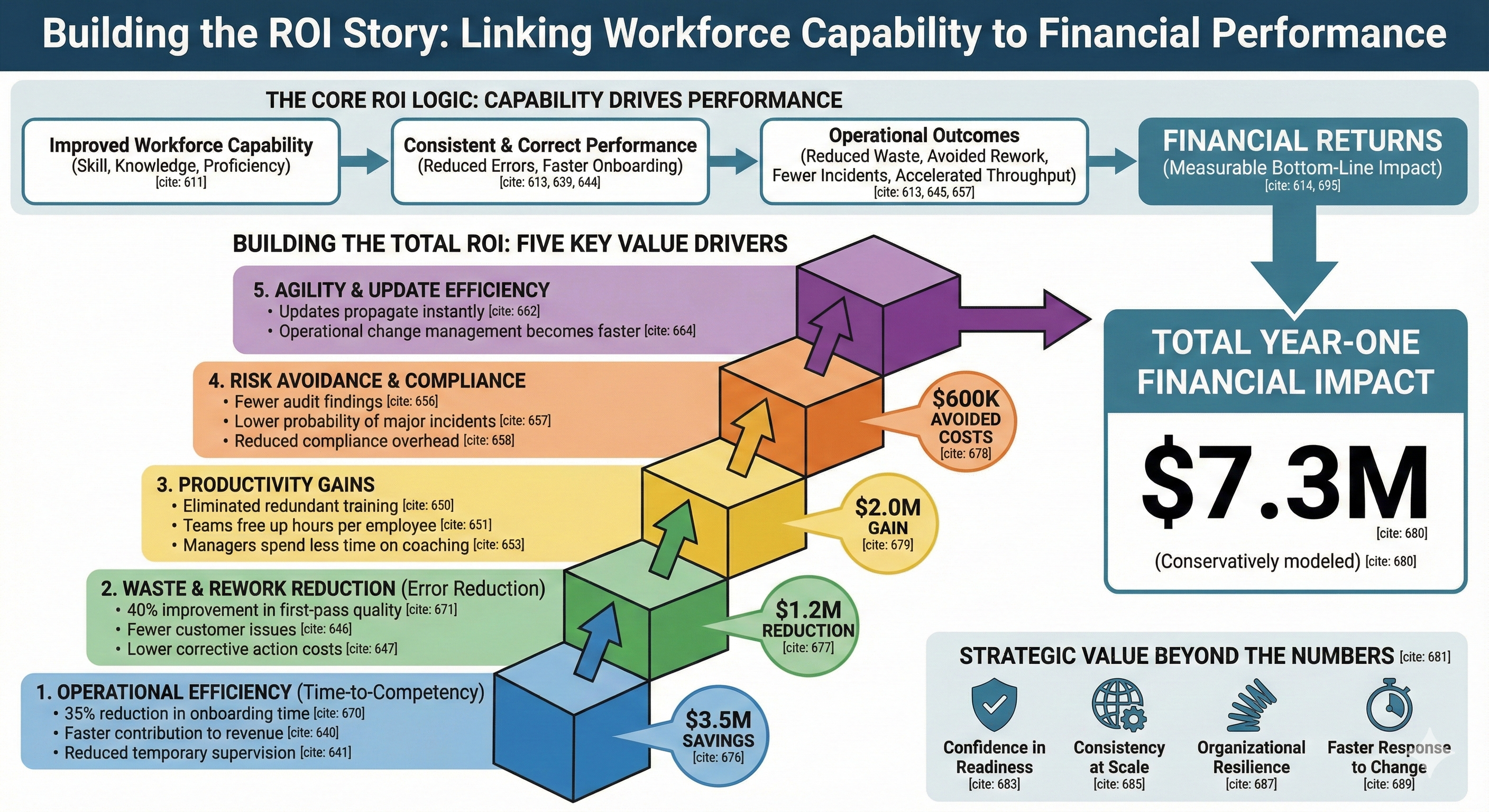
The ROI Narrative: Show projected impact using Finance-approved numbers.
The ROI story is told in a visually appealing report that can be shared by the project champion to get buy-in from key decision makers. Sales works with the champion to make sure inputs and outputs are realistic and the story can be told in a convincing manner.
The ROI story is told in a visually appealing report that can be shared by the project champion to get buy-in from key decision makers. Sales works with the champion to make sure inputs and outputs are realistic and the story can be told in a convincing manner.
The Cost of Inaction (Current State)
Inconsistency is expensive. Without verified capability, organizations bleed money through:
- Operational Rework: 15% of labor hours spent fixing errors caused by poor training.
- Content Waste: 40% of L&D budget spent on generic courses that employees ignore.
- Compliance Risk: Potential fines and reputational damage from unverified readiness.
The Value Realized (Future State)
Precision learning enables direct financial gains by optimizing the workforce:
- Efficiency Gains: Reclaim 40,000+ hours annually by targeting only skill gaps.
- Faster Time-to-Value: New hires reach full productivity 30% faster.
- Risk Avoidance: 100% audit trail of verified capability reduces insurance premiums.
The ROI Calculator: The starting point is to gather site-specific inputs and create a personalized story of projected impact.
This type of tool is tailored to the benefits of the technology platform. By requesting the current state of affairs, a backend calculation shows the projected improvements that the technology can help deliver. This drives the ROI analysis report shown above.
This type of tool is tailored to the benefits of the technology platform. By requesting the current state of affairs, a backend calculation shows the projected improvements that the technology can help deliver. This drives the ROI analysis report shown above.
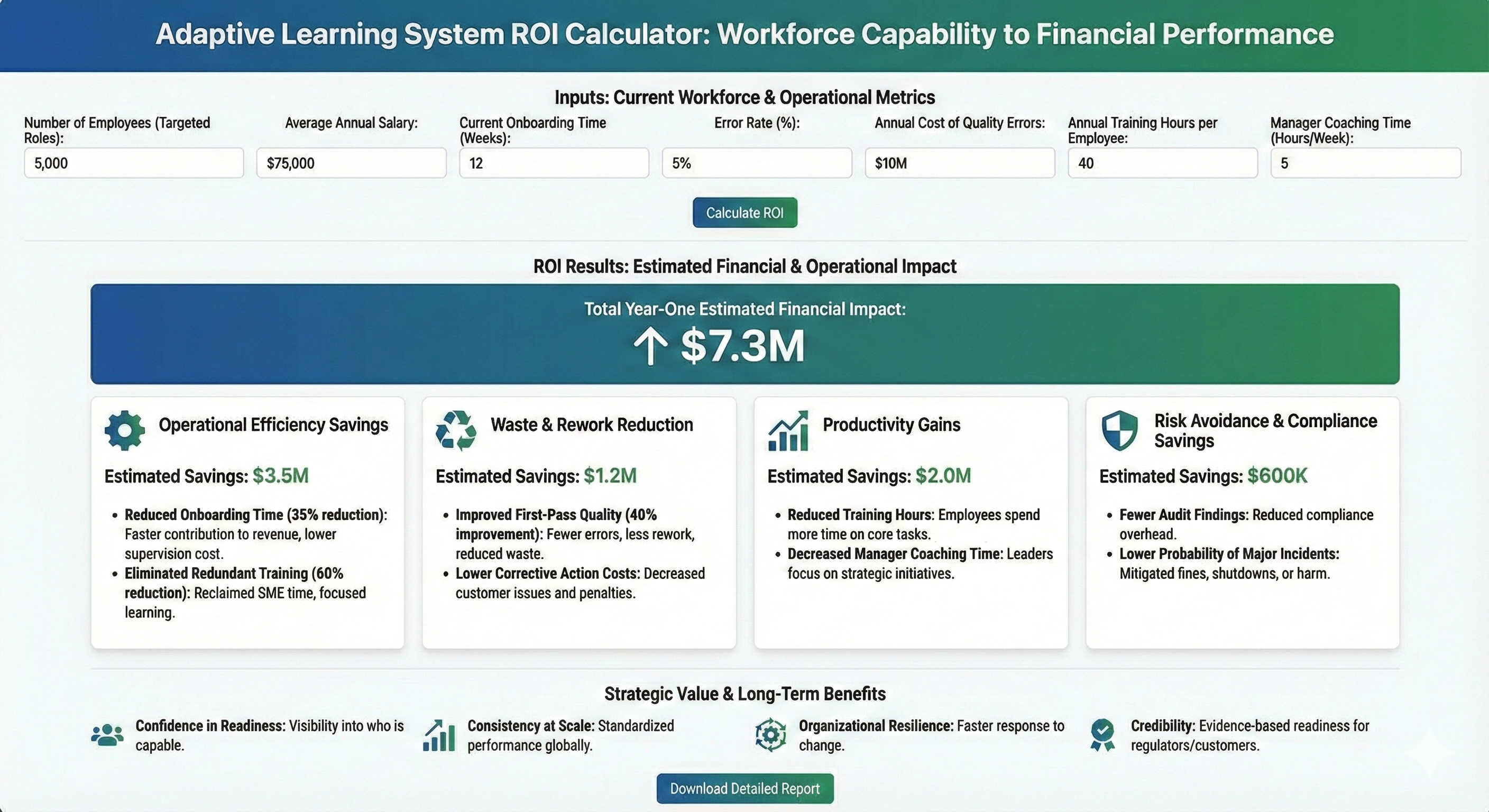
The Methodology
This model uses conservative industry benchmarks (e.g., avg. hourly wage, error rates) combined with customer-specific inputs. It shifts the conversation from "buying software" to "investing in margin improvement."